

Vitamin C is one of the best-researched actives in skincare. It protects the skin from environmental stress, supports its structure and makes the complexion look more radiant. But how exactly does a vitamin C serum work, and is it better to apply it in the morning or evening? Here you will find the answers.
How vitamin C works in the skin
Protection against free radicals
UV light and air pollution create free radicals that damage cells and collagen. As an antioxidant, vitamin C neutralises them before they can harm the skin. This makes it an ideal complement to sun protection.
Support for collagen
The skin needs vitamin C to form collagen. Applied regularly, vitamin C supports firmer, smoother-looking skin. More about collagen loss in our guide to skin ageing.
A more even, radiant complexion
Vitamin C inhibits the production of excess melanin and helps dark spots to fade. At the same time, the complexion looks fresher and more radiant. More about this in our guides to dull skin and dark spots.
Why freshness matters
Pure vitamin C, ascorbic acid, is particularly effective, but also unstable. In contact with air, light and water, it oxidises and loses its effect. A serum that turns yellow or brown has already lost some of its effectiveness. This is why the form of the product is so important: airtight packaging, stabilised forms or products that are only mixed shortly before use keep the vitamin C fresh.
Vitamin C serum: morning or evening?
Vitamin C can be applied at any time of day, but the morning offers a clear advantage: as an antioxidant, it supports your sun protection against the free radicals created by UV light and pollution during the day. Apply the serum after cleansing and before your day cream and sunscreen.
In the evening, vitamin C can also be used, for example if you use other actives in the morning. What matters most is regular use. In which order to apply your products is explained in our guide skincare routine order.
How to use vitamin C correctly
- On cleansed skin: apply the serum to freshly cleansed skin, before your cream.
- With sun protection: vitamin C does not replace sunscreen, but complements it. Suitable products can be found in our collection face sunscreen.
- Combine carefully: sensitive skin should not use vitamin C at the same time as strong acids or retinol. Alternate them instead, for example vitamin C in the morning and acids in the evening.
- Store correctly: keep the product closed, cool and away from light.
Our vitamin C care
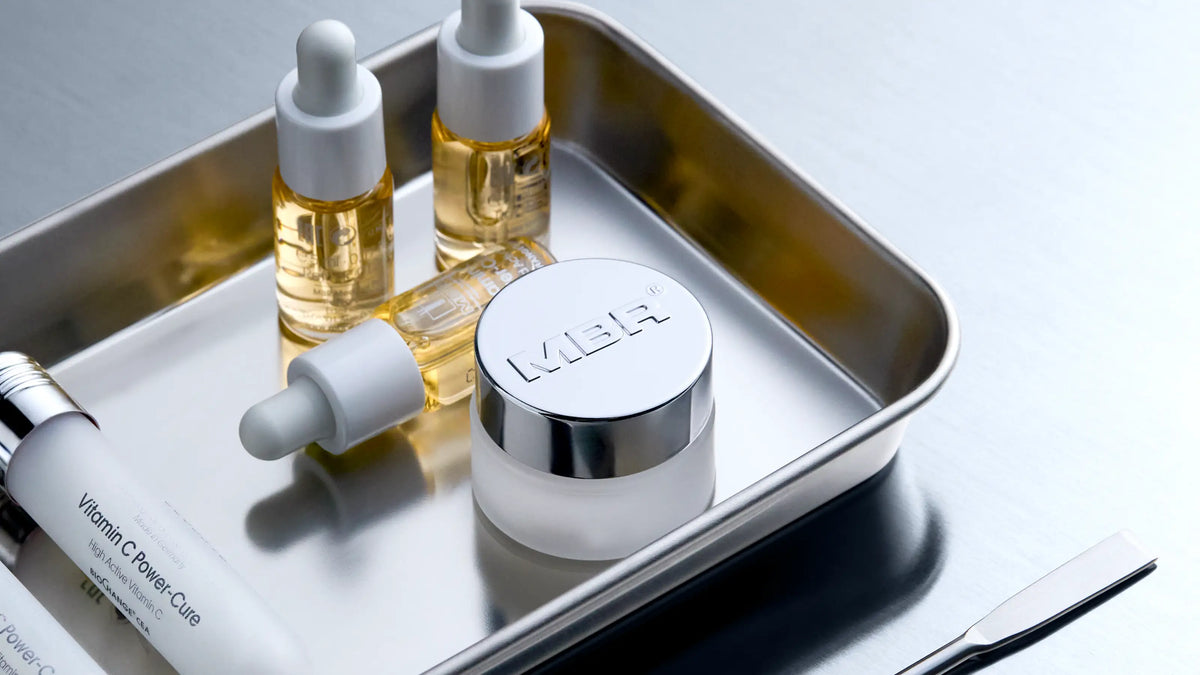
The Vitamine C Power - Cure is a 21-day intensive course. Highly concentrated vitamin C spheres are mixed fresh every day with a liquid activator containing hyaluronic acid, HyaCare, Gatuline Expression and Pentavitin. This way, the vitamin C reaches your skin at full strength.
If your skin needs antioxidant protection without high-dose vitamin C, the Power Serum with black currant, vitamin E and vitamin B12 is a gentle alternative for everyday use. More serums can be found in our collection face serum.
Frequently asked questions about vitamin C serum
How long does it take for vitamin C to work?
The complexion often looks fresher after a few days. For a more even skin tone and visible effects on dark spots, allow four to twelve weeks of regular use.
Is it normal for vitamin C to tingle?
A slight tingling can occur with high concentrations, especially on sensitive skin. If it burns or the skin turns red, use the product less often.
Can I use vitamin C with niacinamide?
Yes. The two actives complement each other well and can be used in the same routine.





Share:
The Skin Microbiome: Skincare With Ferments
Bakuchiol: The Plant-Based Retinol Alternative