

Fine red veins on the cheeks and nose, skin that flushes quickly: couperose affects many people with fair, sensitive skin. It is often confused with rosacea, or it is an early sign of it. In this guide, you will find out how the two differ, what triggers them and which care calms the skin. Important: rosacea is a skin disease that belongs in the hands of a dermatologist. Skincare can support medical treatment, but not replace it.
What is couperose?
Couperose refers to permanently dilated, visible small blood vessels in the face, mostly on the cheeks, nose and chin. The vessel walls have lost elasticity, so the vessels no longer contract fully. Couperose is not an illness, but a cosmetic concern that is common in fair, thin and sensitive skin.
What is rosacea?
Rosacea is a chronic inflammatory skin disease. It typically begins with frequent flushing and persistent redness in the centre of the face. Over time, visible veins, small bumps and pustules can follow. Rosacea progresses in phases and should be diagnosed and treated by a dermatologist.
Couperose and rosacea: the differences
- Couperose shows up as fine, visible veins, usually without inflammation, bumps or burning.
- Rosacea combines redness and flushing with inflammation and often a burning or stinging sensation. Bumps and pustules can occur.
- Transition: couperose can be the first stage of rosacea. If redness increases or inflammation develops, please see a dermatologist.
Not every redness is couperose or rosacea. An overview of other causes can be found in our guide facial redness.
Common triggers for redness
- Temperature changes: heat, cold, sauna and hot showers dilate the vessels.
- UV light: one of the most important triggers and a factor in vessel damage.
- Spicy food, alcohol and hot drinks.
- Stress and strong emotions.
- Irritating care: alcohol, fragrance, harsh scrubs and frequent product changes.
The right care for couperose and rosacea-prone skin
Cleanse gently
Use lukewarm water and a mild cleanser without harsh surfactants, such as the ContinueLine Three in One Cleanser. Do not rub, just pat your skin dry.
Calm and strengthen the barrier
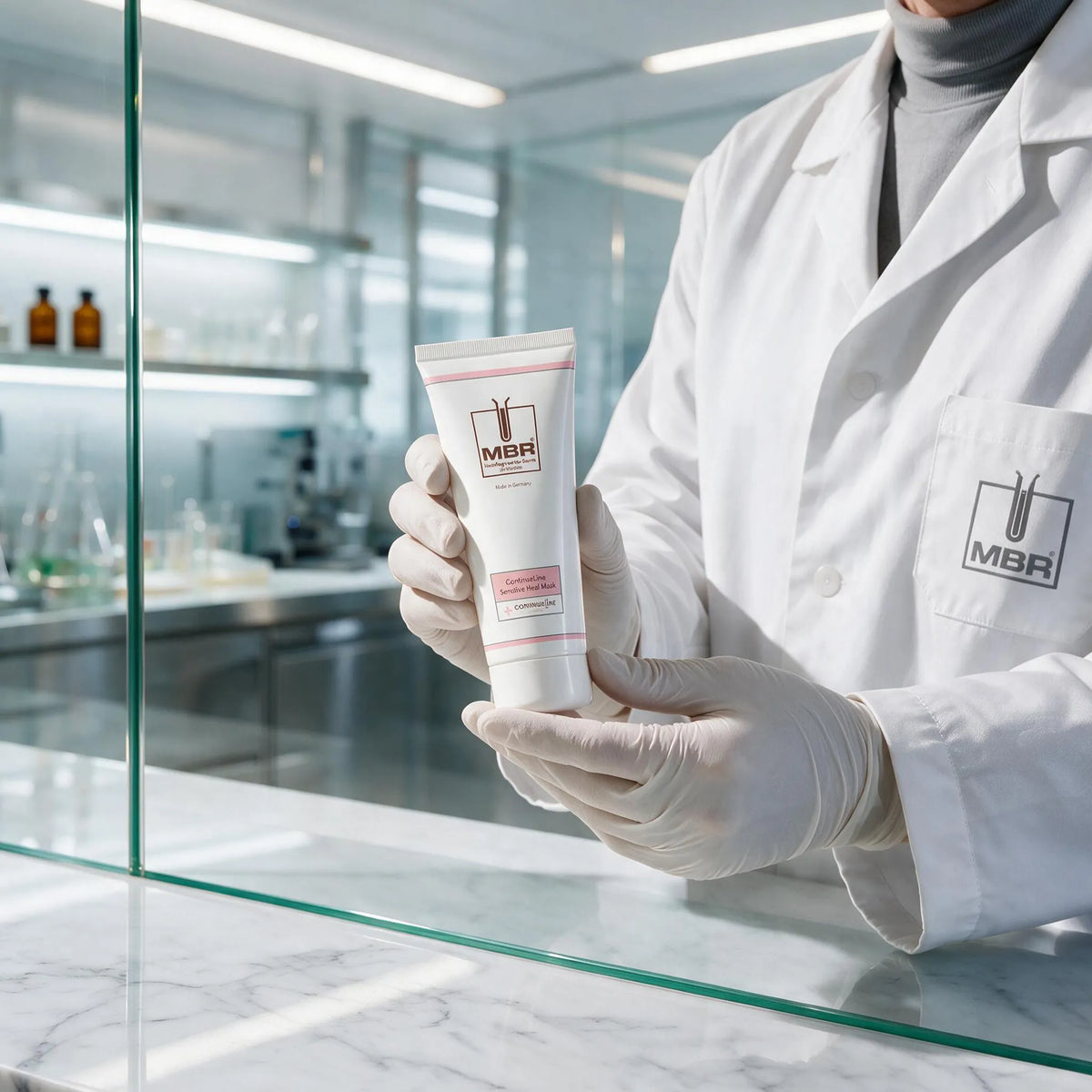
A strong skin barrier reacts less sensitively to external stimuli. The Sensitive Skin Sealer Cream with Ceramide NP, chamomile and bisabolol strengthens the barrier and visibly calms the look of redness. The Modukine Serum provides intensive moisture and soothes irritated skin. As a weekly treatment, the Sensitive Heal Mask with Ectoin and argan oil cleanses gently and calms. All products can be found in our collection cream for facial redness.
Avoid irritants
Choose formulas without fragrance and alcohol and avoid mechanical scrubs. Suitable products can be found in our collection fragrance-free face care. How to strengthen your skin's protective layer is explained in our guide strengthen your skin barrier.
Protect from the sun every day
Daily sun protection with a high SPF is essential, as UV light intensifies redness. Suitable products can be found in our face sunscreen collection.
Frequently asked questions about couperose and rosacea
Can couperose be treated?
Visible veins do not disappear with skincare. Dermatologists can treat them with laser or IPL. Gentle care and sun protection help to prevent new veins and visibly calm the skin.
Which cream is suitable for couperose?
Look for fragrance-free formulas with barrier-strengthening and soothing actives such as ceramides, panthenol and chamomile, for example the Sensitive Skin Sealer Cream.
Is couperose the same as rosacea?
No. Couperose describes visible, dilated veins. Rosacea is an inflammatory skin disease that can also involve visible veins. Couperose can, however, develop into rosacea.
What helps with perioral dermatitis?
Perioral dermatitis is a skin condition around the mouth that should be assessed by a dermatologist. Often a "zero therapy" with very few, mild products is recommended. Rich creams should be avoided.


Share:
Marionette Lines: Causes & Care
Finding the Best Night Cream: What Matters for Mature Skin