

The skin burns, feels tight and reacts to products it normally tolerates well. Irritated skin is a signal that its protective barrier is overwhelmed. Often, the trigger is too much rather than too little. Here you will find out what irritates the skin and how to calm it again with gentle care.
How to recognise irritated skin
- redness, often in patches or on the cheeks
- a burning, stinging or tight feeling
- dry, flaky or rough areas
- stinging when applying products that were previously well tolerated
What irritates the skin?
Too much care
Several acids, retinol, scrubs and new products at the same time can overwhelm even robust skin. Frequent cleansing with harsh products also removes the skin's own protective lipids.
Weather and environment
Cold, wind, dry heating air, strong sun or hard water put the skin under stress, especially in winter.
Stress and lifestyle
Lack of sleep, stress and hormonal fluctuations make the skin more reactive.
A weakened skin barrier
Behind almost every irritation is a weakened skin barrier. Irritants can penetrate more easily, and the skin loses moisture more quickly. How the skin barrier works is explained in our guide strengthen the skin barrier.
Irritated skin or sensitive skin?
Irritated skin is a temporary state with a specific trigger. Once the trigger has been removed and the barrier has recovered, the skin calms down again. Sensitive skin, on the other hand, is a skin type that reacts more strongly in the long term and needs permanently gentle care. Persistent redness can also indicate couperose or rosacea. More on this in our guide couperose and rosacea.
How to calm irritated skin
Reduce your routine
Less is more. Pause acids, retinol, scrubs and new products for a few weeks. Concentrate on gentle cleansing, a soothing cream and sun protection.
Cleanse gently and rebalance
Cleanse your skin with lukewarm water and a mild, fragrance-free cleanser. A soothing toner then rebalances the skin. The ContinueLine Soft Tonic with hyaluronic acid, urea and coastal chamomile rebalances and calms reactive skin after cleansing.
Soothing masks
Masks give stressed skin a moment of calm:
- The Sensitive Liquid Mask is a fleece mask with Modukine, melon extract, allantoin and Pentavitin for hypersensitive skin.
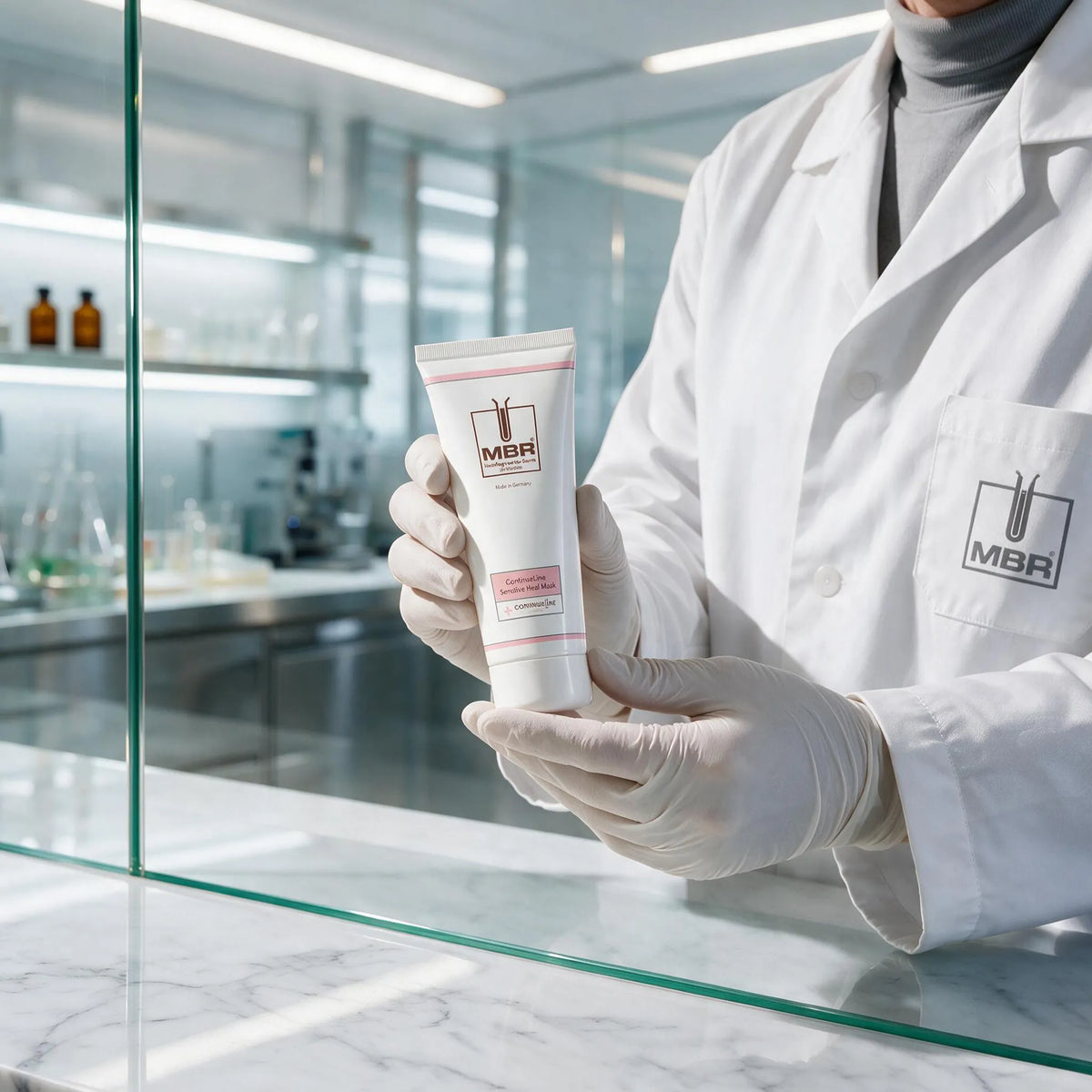
- The Sensitive Heal Mask with ectoin, allantoin and argan oil cleanses and calms the look of reactive skin.
A barrier-strengthening cream
Ceramides replenish the lipids that hold the skin barrier together. The Sensitive Skin Sealer Cream with ceramides and chamomile extract calms and reinforces the barrier of particularly reactive skin. More products can be found in our collections skincare for sensitive skin and fragrance-free face care.
Protection from external influences
Protect your skin from sun, cold and wind. Choose mineral or particularly well-tolerated sun protection.
What to avoid with irritated skin
- fragrances and essential oils
- high concentrations of alcohol
- scrubs and exfoliating acids
- very hot water and long showers
- trying out several new products at the same time
When should you see a doctor?
If your skin does not calm down after two to three weeks of gentle care, if blisters, swelling or severe itching occur, or if you suspect an allergy, please see a dermatologist.
Why harsh cleansing can disturb the skin's natural balance is explained in our guide skin pH.
Frequently asked questions about irritated skin
How long does it take for irritated skin to calm down?
With gentle care, the skin often calms down within a few days. The skin barrier needs around two to four weeks to recover completely.
Can I wear make-up on irritated skin?
Preferably not, or only sparingly. If you do, choose fragrance-free products and remove them gently in the evening.
When can I use my actives again?
Once your skin has been calm for at least two weeks. Reintroduce actives one at a time and start with a low frequency.
Everything about reddened skin can be found in our guide facial redness.


Share:
Bakuchiol: The Plant-Based Retinol Alternative
Dull Skin: What to Do? Causes & Care for More Radiance