

When temperatures drop, many people notice that their skin feels tight, flaky or reddened, even with their usual care. Cold air, wind and dry heating air remove moisture from the skin and weaken its protective barrier. Here you will find out why the skin needs different care in winter and what a good face cream for winter should do.
Why the skin suffers in winter
Cold reduces sebum production
Below around 8 °C, the sebaceous glands produce noticeably less sebum. The skin's natural protective film becomes thinner, and the skin loses moisture more quickly.
Dry heating air
Indoors, heating air often has a humidity of only 30 percent or less. It draws moisture from the skin, which then feels tight and rough.
Constant temperature changes
Switching between the cold outside and warm rooms puts strain on the small blood vessels in the skin. Sensitive skin often reacts with redness. More on this in our guide to facial redness.
Less sun, but still UV light
Even in winter, UV light reaches the skin, especially in the mountains and on snow, which reflects up to 80 percent of UV radiation.
What a good winter face cream should contain
- Rich lipids: shea butter, plant oils and squalane replace the missing protective film.
- Ceramides: they strengthen the skin barrier and reduce moisture loss.
- Moisture binders: hyaluronic acid and glycerin bind moisture in the skin, but need lipids on top to stay there.
- Calming actives: panthenol, allantoin or bisabolol soothe stressed skin.
Many light moisturisers that are pleasant in summer are not enough in winter. Choose a richer texture, especially if your skin tends to be dry.
Our care for cold days
- The ContinueLine Protection Shield Rich with shea butter, sesame oil and hyaluronic acid reinforces the barrier of very dry, reactive skin.
- The Sensitive Skin Sealer Cream with ceramides and chamomile extract calms and protects sensitive skin.
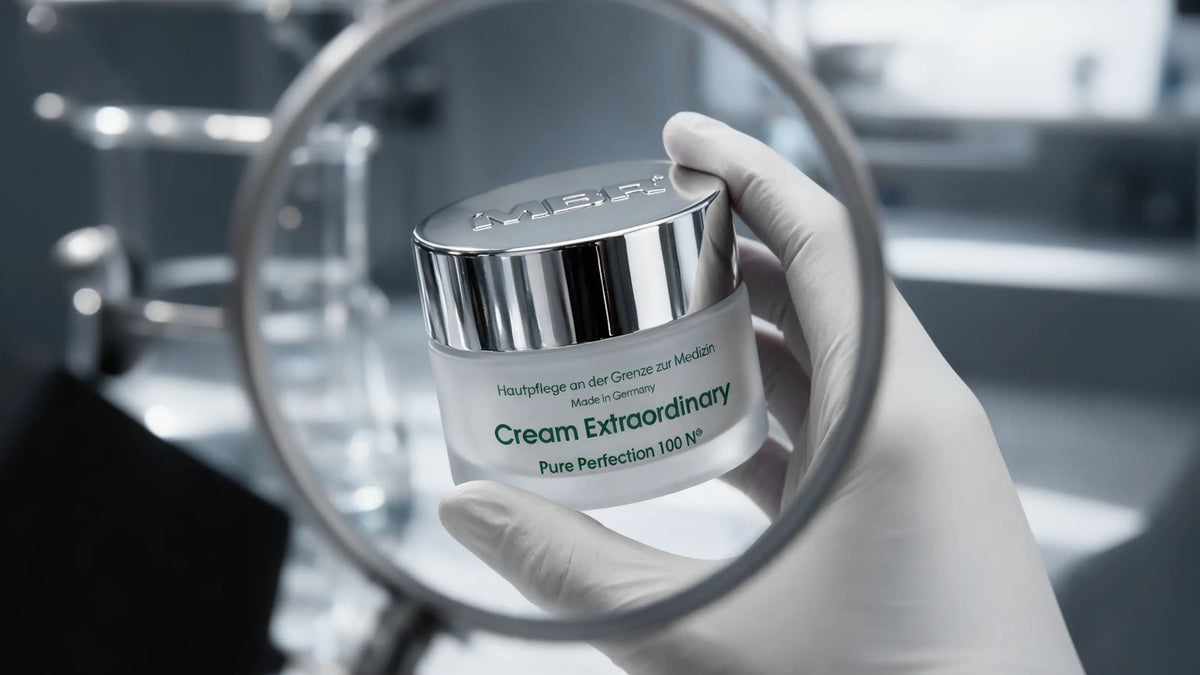
- The Cream Extraordinary combines the MBR FibroBoost Complex with plant oils for demanding, mature skin.
- The Night Oil with chlorella extract and Kalpariane provides extra lipids overnight, on its own or mixed with your night cream.
More rich creams can be found in our collection face cream for dry skin.
How to adapt your routine in winter
- Cleanse gently: use lukewarm instead of hot water and a mild, moisturising cleanser.
- Apply your cream in time: apply your face cream about 30 minutes before going outside so that it can absorb. Water-rich creams applied right before going out can make the skin feel colder.
- Exfoliate less often: once a week is usually enough in winter.
- Do not forget sun protection: especially on winter holidays in the mountains.
- Care for your lips: lips have no sebaceous glands and dry out particularly quickly. More in our guide to dry lips.
- Humidify the air: a humidifier or a bowl of water on the radiator improves the indoor climate.
Frequently asked questions about face cream in winter
Do I need a different face cream in winter?
Often, yes. In winter, most skin types benefit from a richer cream with more lipids. Oily skin can usually continue to use its light care, supplemented by a moisturising serum.
Does a greasy cream protect against frostbite?
A rich cream protects the skin from drying out and from wind. For extreme cold, for example when skiing, special cold protection creams with a high lipid content and little water are suitable.
Why is my skin red and tight in winter?
Cold, wind and heating air weaken the skin barrier. The skin loses moisture and reacts more sensitively. Rich, soothing care helps. Everything about this can be found in our guides dry skin and strengthen the skin barrier.




Share:
Hormonal Acne: Causes & Care, Including From 40 and During the Menopause
Dry Lips: Causes and What Helps