

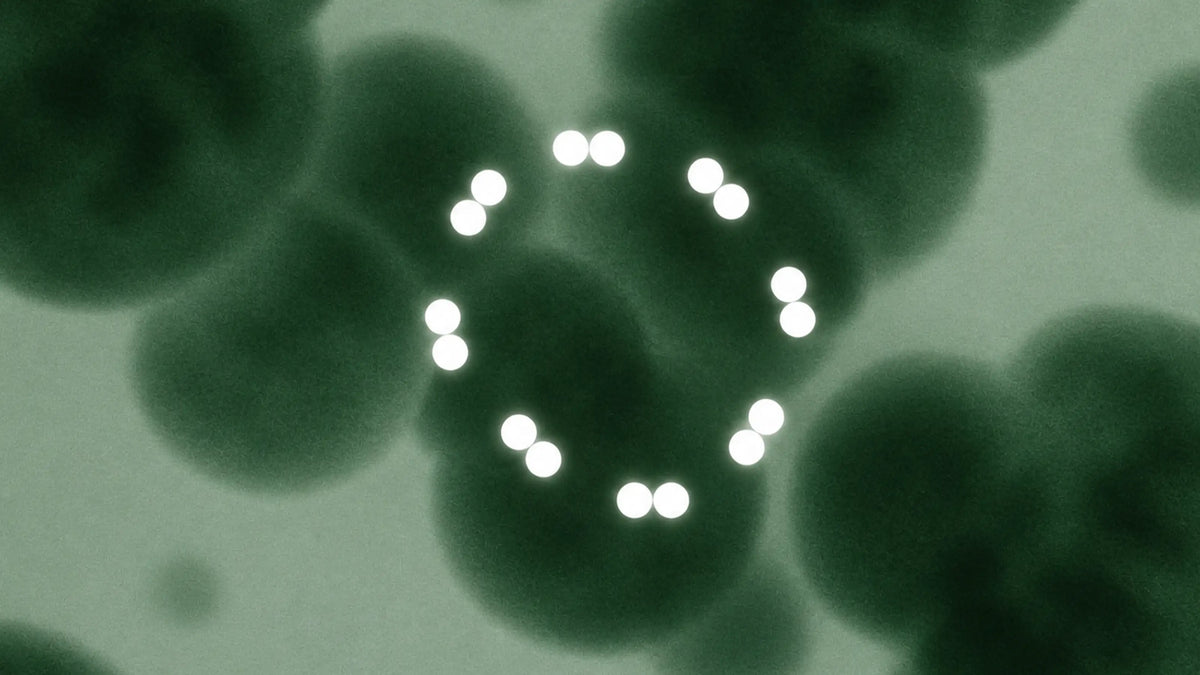
Our skin is home to billions of microorganisms. Far from being a problem, most of them are allies: they help to protect the skin and keep it in balance. Research into the skin microbiome has grown rapidly in recent years, and skincare with ferments, prebiotics and probiotics has become a trend. Here you will find out what is behind it and what the science says so far.
What is the skin microbiome?
The skin microbiome is the community of bacteria, fungi and viruses that live on and in the skin. Around one million bacteria from hundreds of different species can live on a single square centimetre of skin. Among the most common are Staphylococcus epidermidis, Cutibacterium acnes and Corynebacterium species.
The composition differs depending on the area of the skin: oily zones such as the forehead and nose are colonised differently from moist areas such as the armpits or dry areas such as the forearms. Every person also has their own individual microbiome.
What does the microbiome do for the skin?
- Protection against pathogens: the resident microorganisms occupy space and nutrients, making it harder for harmful germs to settle.
- Support for the acid mantle: they contribute to the slightly acidic pH of the skin surface, which is on average below 5.
- Training the immune system: the skin's immune system learns to distinguish between harmless and harmful microorganisms.
- Working with the skin barrier: a healthy microbiome and an intact skin barrier support each other. More on this in our guide strengthen the skin barrier.
When the microbiome is out of balance
If the balance of microorganisms shifts, dermatologists speak of dysbiosis. Studies have found such changes in several skin conditions, for example an increase in Staphylococcus aureus in atopic eczema, or changes in Cutibacterium acnes in acne. Whether dysbiosis is the cause or the consequence is not yet fully understood. Skin conditions should always be treated by a dermatologist.
What disturbs the skin microbiome?
- Over-cleansing: frequent washing with harsh surfactants removes protective lipids and changes the skin's pH.
- Alkaline products: classic soaps with a high pH disturb the acid mantle.
- Too many actives: frequent exfoliation and combining many intensive products can weaken the barrier. More on this in our guide to irritated skin.
- Disinfectant and antibacterial products: they do not distinguish between harmful and beneficial bacteria.
- External factors: UV light, air pollution and medication such as antibiotics can also influence the microbiome.
Prebiotics, probiotics and ferments: what is behind the terms?
Prebiotics
Prebiotics are substances that serve as food for beneficial microorganisms, for example certain sugars such as inulin or fructooligosaccharides.
Probiotics
Probiotics are live microorganisms. In cosmetics, they are rare, because products need to be preserved to keep them safe. Most skincare products described as probiotic therefore contain inactivated bacteria or their components.
Ferments and postbiotics
Ferments are created when microorganisms such as yeasts or bacteria process plant or other raw materials. The resulting extracts, filtrates and lysates contain substances such as amino acids, peptides, organic acids and polysaccharides. They are also known as postbiotics. Initial studies indicate that certain ferments can support the skin's moisture and barrier. However, research is still at an early stage, and the results cannot be generalised to all ferments.
How to care for your skin and its microbiome
Cleanse gently
Use mild cleansers with a skin-friendly pH and lukewarm water. Cleansing once or twice a day is enough. Suitable products can be found in our collection cleansers.
Exfoliate in moderation
Exfoliate no more than two to three times a week, and choose gentle methods if your skin is sensitive. What to look out for is explained in our guide AHA and BHA.
Strengthen the barrier
Lipids, ceramides and moisture keep the skin barrier intact and create a stable environment for the microbiome.
Less is often more
A simple routine with a few well-tolerated products is often better for the skin than many different actives at the same time.
Our care with fermented ingredients
Several MBR products contain fermented ingredients:
- Kombuchka: a ferment of black tea created by yeasts and bacteria. It is found, for example, in Twentyfour Hours Extreme and in the Collagen Lift Serum.
- Marine ferment extract: obtained from a marine microorganism, contained in the Tissue Activator Serum.
- Lactobacillus ferment: a ferment of lactic acid bacteria, contained in the Premium Face Serum.
- Bacillus ferment extract: contained in THE BEST Night Mask.
Why the beneficial skin flora feels most comfortable in a slightly acidic environment is explained in our guide skin pH.
Frequently asked questions about the skin microbiome
Can I test my skin microbiome?
Microbiome analyses exist, but they are mainly used in research. For everyday skincare, they currently offer little practical benefit.
Do probiotic creams really contain live bacteria?
Rarely. Because cosmetics need to be preserved, most products contain inactivated bacteria, lysates or ferments instead of live microorganisms.
Is fermented skincare suitable for sensitive skin?
Ferments are generally well tolerated. As with any new product, test it on a small area first if your skin is very sensitive.

Share:
Post-Inflammatory Hyperpigmentation: Causes & Care
Vitamin C Serum: Benefits & Use, Morning or Evening?