


Microdermabrasion is a classic among cosmetic facial treatments. It mechanically removes the uppermost layer of dead skin cells and makes the complexion look smoother, finer and fresher. In this guide, you will find out how the treatment works, what it can realistically achieve and which care your skin needs afterwards.
What is microdermabrasion?
Microdermabrasion is a mechanical peel. A device gently abrades the outermost layer of the skin, the stratum corneum, and at the same time vacuums away the loosened skin cells. Unlike a chemical peel, it works without acids, purely through gentle friction.
How a microdermabrasion treatment works
Diamond or crystal microdermabrasion
There are two common methods. In diamond microdermabrasion, a handpiece with a fine diamond tip abrades the skin. In crystal microdermabrasion, tiny crystals are blown onto the skin and vacuumed away again. Both methods work on the surface of the skin.
Procedure
After cleansing, the practitioner moves the handpiece systematically over the face. The treatment takes about 30 to 45 minutes and is usually followed by a mask or soothing care. Afterwards, the skin may be slightly reddened for a few hours.
What microdermabrasion can achieve
- Smoother skin: the complexion feels softer and looks more even.
- Finer pores: the look of enlarged pores is visibly refined.
- Fresher complexion: dull, tired skin looks more radiant.
- Better absorption: subsequent care can penetrate better.
- Superficial irregularities: fine lines and slight discolouration can be softened with several sessions.
Deeper wrinkles and scars cannot be treated with microdermabrasion, as it only works on the surface. For these, microneedling or other medical procedures are better suited.
Who is microdermabrasion suitable for?
Microdermabrasion is suitable for normal, combination, oily and dull skin. It should be avoided with very sensitive skin, rosacea, couperose, active acne, cold sores or open wounds. More on reddened skin can be found in our guide couperose & rosacea.
How often should you have microdermabrasion?
For a visible result, a course of four to six treatments at intervals of two to four weeks is usually recommended. After that, a refresher every one to two months is sufficient.
Skincare after microdermabrasion
After the treatment, the protective outer layer of the skin is thinner. The skin is therefore more sensitive and loses moisture more quickly. These tips help it regenerate:
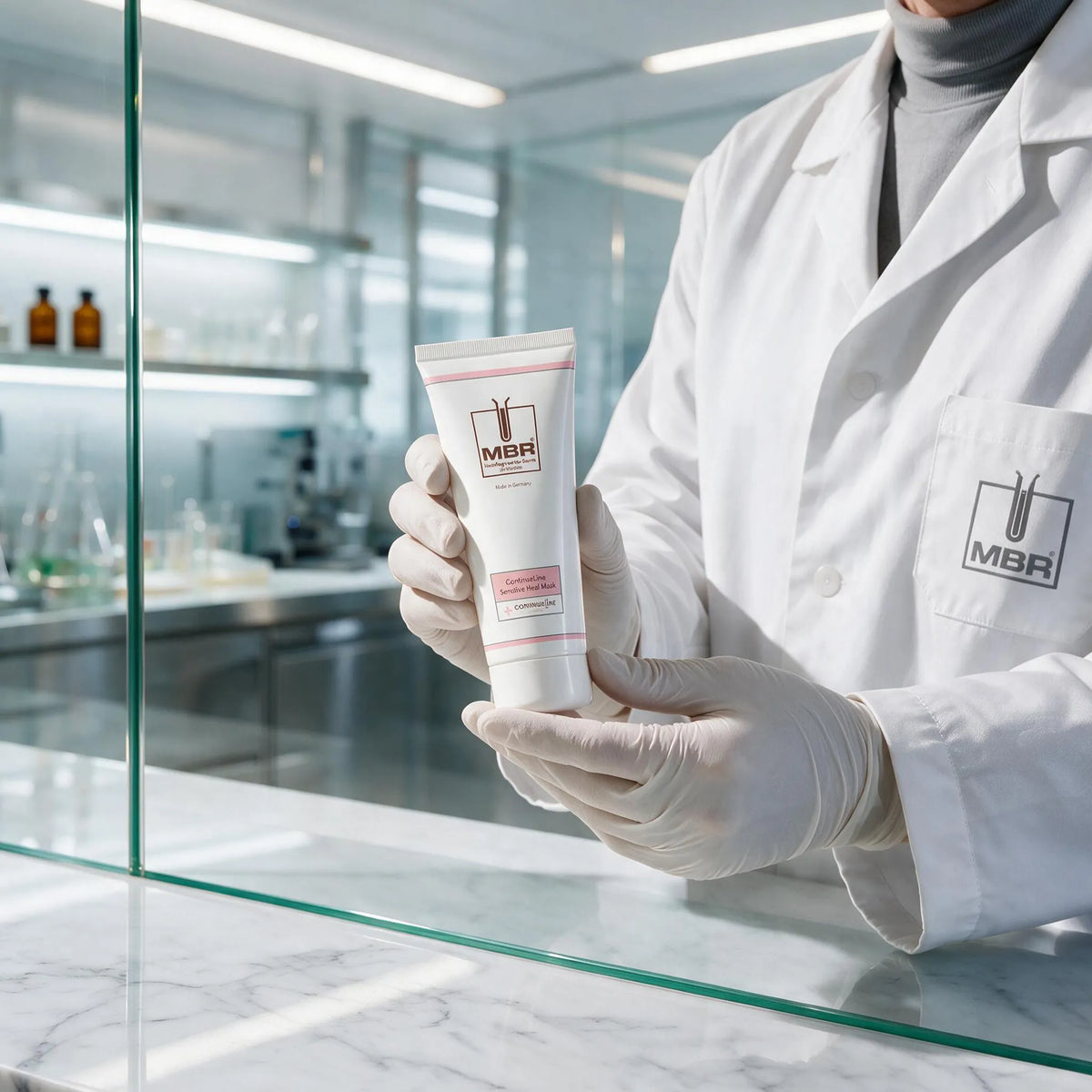
- Calm and hydrate: the Hyaluron Mask with hyaluronic acid, Ectoin and allantoin replenishes moisture and regenerates a stressed skin barrier. The Sensitive Heal Mask with Ectoin and argan oil is suitable for sensitive skin once it has calmed down.
- Support with actives: the ContinueLine Cell & Tissue Activator with hyaluronic acid and ChroNoline supplies the skin with intensive moisture.
- No acids or scrubs: avoid fruit acids, enzyme peels and retinoids for about a week.
- Sun protection is a must: the freshly treated skin is more sensitive to light. Use a high SPF every day, for example from our face sunscreen collection.
More products for the time after a treatment can be found in our collection care after aesthetic treatments.
Microdermabrasion or exfoliation at home?
At home, you can refine your skin regularly with gentle peels, even if they do not replace a professional treatment. Enzymes dissolve dead skin cells without rubbing, and fruit acids work slightly more intensively. Suitable products can be found in our collections enzyme peel and AHA peel.
Frequently asked questions about microdermabrasion
Does microdermabrasion hurt?
No. Most people describe the treatment as a gentle scraping or massage. Slight redness afterwards is normal.
What is the difference between microdermabrasion and Hydrafacial?
Microdermabrasion removes the top layer of the skin mechanically. A Hydrafacial cleanses the pores with suction and infuses moisture at the same time. It is gentler and also suitable for drier skin.
When will I see results?
The skin feels smoother immediately. Fine lines and irregularities are visibly softened after several sessions.


Share:
Hydrafacial: Procedure, Effects & Hydrafacial at Home
Fruit Acid Peel: Effects, Procedure & Aftercare