

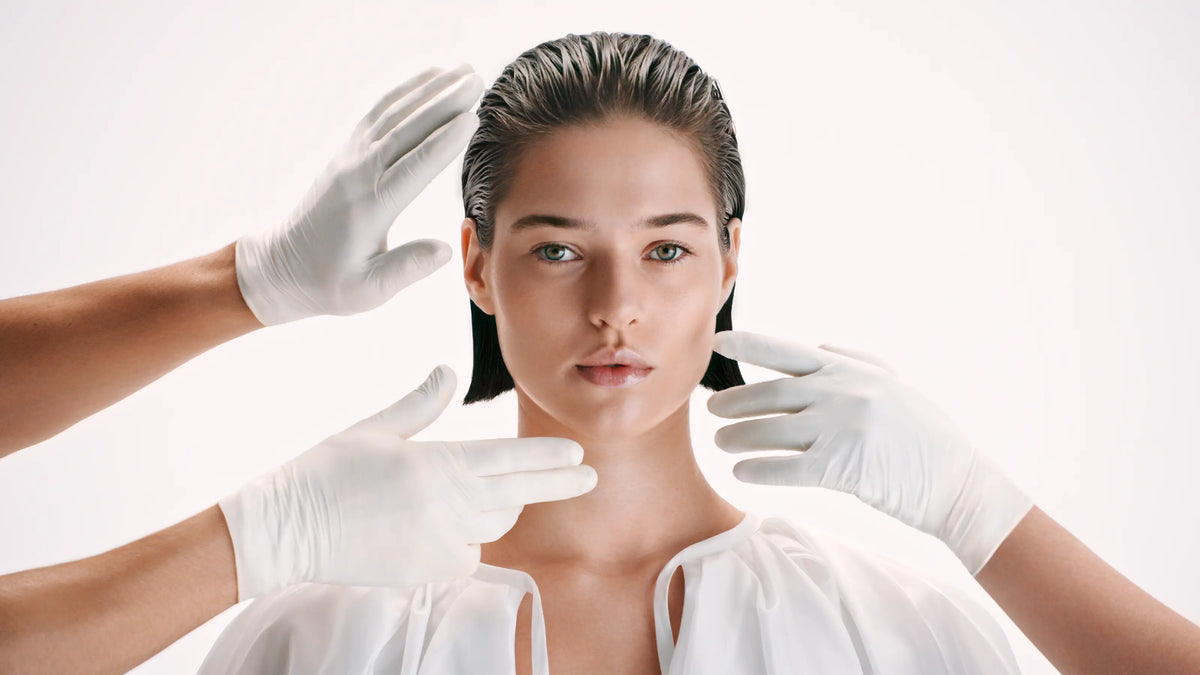
The acne has subsided, but traces remain? Many people struggle with this after blemishes. It is important to know whether they are marks that fade over time or real acne scars. This determines what can help. In this guide, we explain honestly what creams can achieve and where professional treatments are needed.
Acne scars or acne marks?
Not every trace of acne is a scar:
- Acne marks are flat discolourations in red, pink or brown. They are caused by inflammation and usually fade over months. Read more in our guide acne marks and in our article on post-inflammatory hyperpigmentation.
- Acne scars are changes in the skin's texture. They arise when deep inflammation damages the connective tissue. The skin then forms too little or too much new tissue. Scars do not disappear on their own.
A simple test: run your finger over the area. If it is smooth, it is a mark. If you feel a depression or an elevation, it is a scar.
The types of acne scars
Atrophic scars (depressed)
Most acne scars are depressed because too little new tissue has formed. Dermatologists distinguish between three forms:
- Ice pick scars: narrow, deep, pointed indentations.
- Boxcar scars: wider, angular depressions with sharp edges.
- Rolling scars: wide, soft depressions that give the skin a wavy appearance.
Hypertrophic scars and keloids (raised)
If the skin forms too much tissue, raised scars develop. They are less common on the face and occur more often on the chest, back and shoulders.
What can creams do for acne scars?
Honestly: no cream can remove existing acne scars. Scars are structural changes in the deeper skin layers that cosmetics cannot reach.
However, the right care can make a real difference:
- Refine the texture: well-cared-for, moisturised skin looks smoother, and shallow unevenness becomes less noticeable.
- Support the skin: a strong skin barrier makes the skin more resilient, which is particularly important before and after professional treatments.
- Reduce discolouration: care against acne marks helps to even out the complexion around the scars.
- Prevent new scars: consistent care of blemish-prone skin and not squeezing pimples reduce the risk of new scars. Learn more in our guide hormonal acne.
Professional treatments for acne scars
To visibly improve acne scars, professional treatments by dermatologists or qualified practitioners are needed. Which method is suitable depends on the type of scar:
- Microneedling: fine needles create micro-channels in the skin and stimulate its renewal. Particularly suitable for rolling and shallow boxcar scars. More in our guide microneedling.
- Chemical peels: acids remove the upper skin layers and refine the texture. More in our guide fruit acid peel.
- Laser treatments: fractional lasers stimulate collagen formation in deeper layers.
- Medical procedures: deep scars can be treated with fillers, subcision or punch techniques. Treatments like these belong in medical hands.
Often several sessions and a combination of methods are needed. A dermatologist can advise you on which treatment suits your skin.
Our care for skin with acne scars
Our ContinueLine med products are designed for reactive skin and are a good companion during and after professional treatments:
- The ContinueLine Cell&Tissue Activator combines hyaluronic acid, ergothioneine and ChroNOline. It cares for tired, reactive skin and supports a firmer-looking surface.
- The Modukine Serum with Abyssinian oil and hyaluronic acid calms reactive skin and supports a more balanced-looking complexion.
- The Modukine Cream with shea butter and Kalpariane reinforces the barrier and provides lasting comfort.
You can find more care after skin treatments in our collection microneedling aftercare.
Frequently asked questions about acne scars
Do acne scars go away on their own?
No, real acne scars do not disappear on their own. However, red or brown marks often fade over months. That is why it is worth waiting a while before deciding on a treatment.
Which cream is best for acne scars?
No cream removes acne scars. A good cream keeps the skin supple and resilient and makes slight unevenness less noticeable. Look for moisturising and barrier-strengthening ingredients.
How can I prevent acne scars?
Do not squeeze or pick pimples, treat inflammatory acne early and have severe acne treated by a dermatologist. The sooner inflammation is under control, the lower the risk of scars.

Share:
How Fast Do Eyelashes Grow? Growth Cycle and Care
Hyaluronic Acid: Effects and Use in Skincare