


Microneedling is one of the most popular aesthetic treatments for a smoother, firmer complexion. Fine needles create tiny channels in the skin and activate its own repair processes. But how exactly does it work, who is it suitable for, and what does the skin need afterwards? Here you will find all the answers, from the first session to the right aftercare after microneedling.
What is microneedling?
Microneedling is a treatment in which a device with very fine needles is moved over the skin. The needles create thousands of tiny punctures, so-called micro-channels. These are invisible to the naked eye, but they send a clear signal to the skin: repair is needed.
How microneedling works: micro-injuries and collagen
In response to the micro-injuries, the skin starts its natural wound healing. It forms new collagen and elastin fibres, the structural proteins that give the skin firmness and elasticity. Over the following weeks, the skin's texture becomes visibly finer and more even. At the same time, the micro-channels allow active ingredients applied during the treatment to penetrate better.
What microneedling can achieve
- Fine lines and wrinkles: the new collagen visibly smooths the skin.
- Enlarged pores: the complexion looks finer and more even.
- Acne scars and uneven texture: depressions can become flatter with several sessions.
- Loss of firmness: the skin looks firmer and more elastic overall.
Who is microneedling suitable for?
Microneedling is suitable for most skin types and is often used from around 30, when collagen production slows down. It should not be performed on inflamed skin, active acne, cold sores, open wounds or skin diseases in the treatment area. If you are unsure, for example during pregnancy or when taking blood-thinning medication, clarify this with a doctor beforehand.
How a microneedling treatment works
Preparation
The skin is thoroughly cleansed and disinfected. Depending on the needle depth, a numbing cream is applied about 30 minutes before the treatment.
The treatment
The practitioner moves a microneedling pen or roller systematically over the face. Often a serum, for example with hyaluronic acid, is applied at the same time. The treatment itself usually takes 30 to 60 minutes. Afterwards, the skin is red, similar to mild sunburn.
How often should you have microneedling?
For a visible result, three to six sessions at intervals of four to six weeks are usually recommended. This gives the skin enough time to form new collagen between sessions. After that, one refresher treatment every few months is sufficient.
Microneedling at a beautician or a doctor?
The main difference is the needle depth. Beauticians usually work with short needles that treat the upper layers of the skin and refine the complexion. Deeper treatments, for example for pronounced scars, belong in the hands of a doctor. In both cases, choose a practice that works hygienically and explains the procedure to you in detail beforehand.
Microneedling aftercare: what your skin needs now
After the treatment, the skin is particularly permeable and sensitive. The right care helps it calm down quickly and regenerate in peace. A detailed day-by-day plan and suitable products can be found in our collection aftercare after microneedling.
Days 1 to 3: calm and protect
- Gentle care only: use mild, fragrance-free products such as the ContinueLine Protection Shield Soft, which strengthens the skin barrier with ceramides and calms the look of redness.
- No make-up for at least 24 hours, so that the micro-channels can close.
- No sun, sauna or sport for the first days. Protect your skin every day with a high SPF, for example the High Protection Cream SPF 50.
Weeks 1 to 2: strengthen the barrier
- Moisture and actives: once the redness has subsided, the ContinueLine Cell & Tissue Activator with hyaluronic acid and ChroNoline provides intensive moisture.
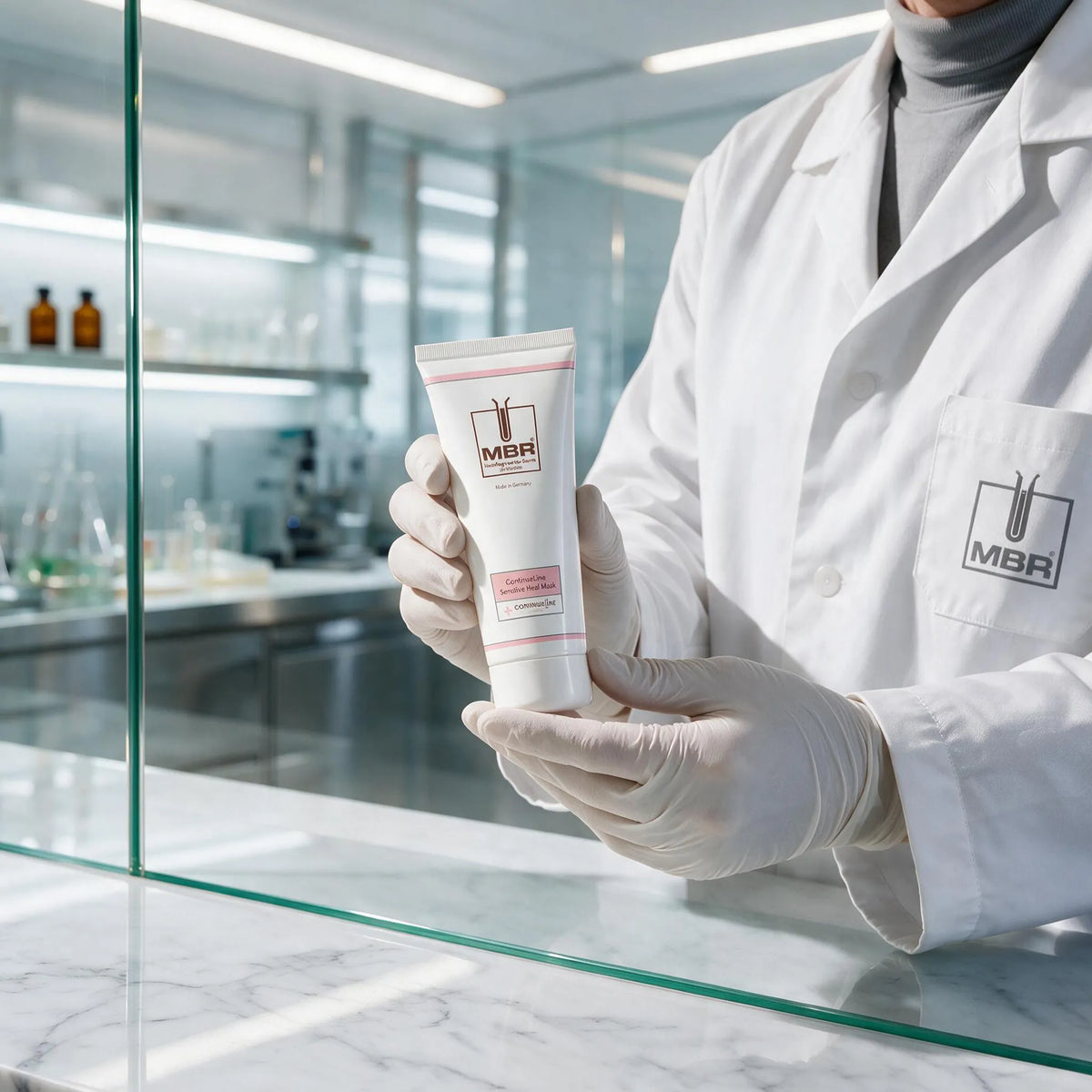
- Gentle intensive care: as soon as the skin has calmed down completely, the Sensitive Heal Mask with Ectoin and argan oil cleanses gently and soothes.
- Avoid acids and peels: fruit acids, enzymes and retinoids are only used again after about a week.
Washing your face after microneedling: here's how
For the first 12 to 24 hours, rinse your face with lukewarm water only. After that, use a very mild cleanser such as the ContinueLine Three in One Cleanser. Do not rub, gently pat your skin dry and use a fresh towel.
Which types of acne scars microneedling is particularly suitable for is explained in our guide acne scars. Why exosomes are often applied after microneedling, and what the research says about them, can be found in our guide exosomes.
Frequently asked questions about microneedling
Does microneedling hurt?
Most people describe the treatment as a slight prickling. With deeper needles, a numbing cream is applied beforehand, which makes the treatment comfortable.
When will I see results?
The skin often looks fresher after just a few days. Since collagen forms slowly, the full result usually appears four to six weeks after the treatment and becomes more pronounced with each session.
Can I use retinol after microneedling?
Not straight away. Retinol, fruit acids and other active substances that irritate the skin should be avoided for about a week after the treatment. Always follow the recommendations of your practitioner.
Can I do microneedling at home with a dermaroller?
Home rollers only work very superficially. There is also a risk of infection if they are not used hygienically. For a visible result and safety, we recommend having the treatment performed by professionals.
How does microneedling differ from Hydrafacial or microdermabrasion?
Microneedling stimulates collagen production in deeper skin layers. Hydrafacial cleanses and moisturises the skin, and microdermabrasion mechanically removes the uppermost layer of the skin. A fruit acid peel refines the complexion with acids. More on care after aesthetic treatments can be found in our collection care after aesthetic treatments.


Share:
Skincare Routine Order: How to Apply Your Care Correctly
Laugh Lines: Causes & Care