

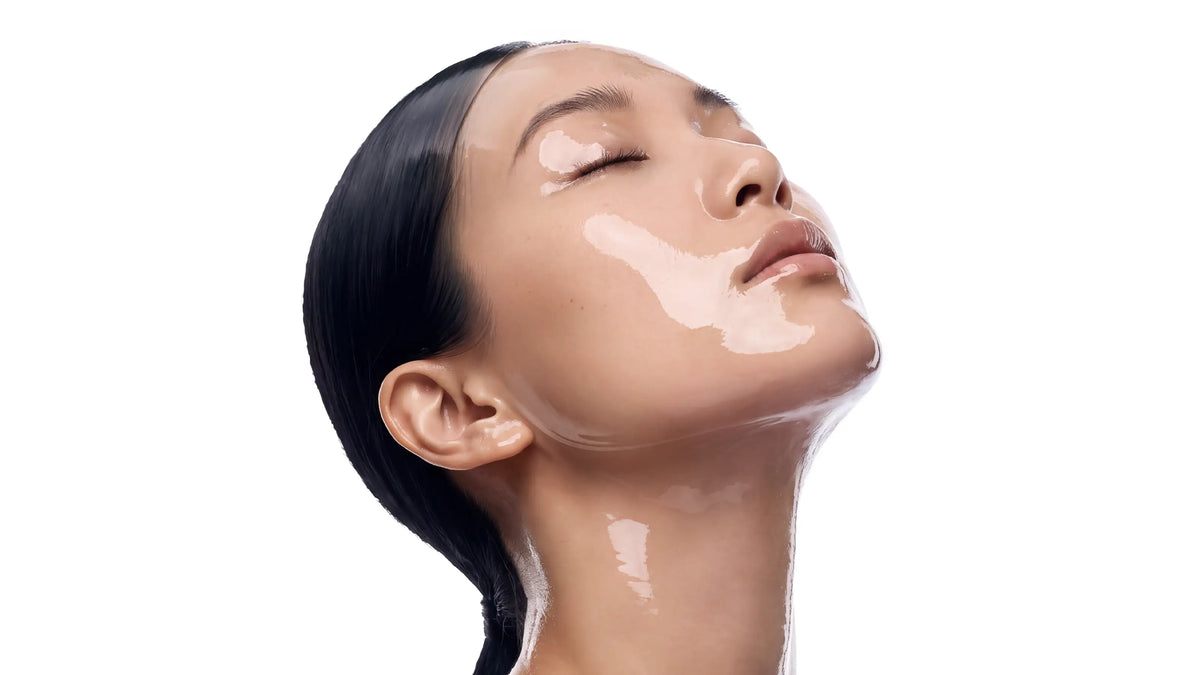
Skin that looks so smooth, clear and radiant that it almost reflects light like glass: that is the idea behind glass skin. The trend originated in Korea and has since inspired skincare routines around the world. But what is really behind it, and how can you achieve an even glow?
What does glass skin mean?
Glass skin describes a complexion that is:
- Well moisturised: plump and supple from within
- Even: with a uniform skin tone and few discolourations
- Smooth: with a fine texture and barely visible pores
- Radiant: with a natural, healthy glow instead of a greasy shine
Realistic expectations
Glass skin is an ideal, not a standard. Real skin has pores, texture and small irregularities, and that is completely normal. Photos on social media are often edited or taken with special lighting. The goal of a good routine is not perfect skin, but skin that is well cared for, moisturised and radiant.
The basis: moisture and a strong barrier
The glow of glass skin comes above all from moisture. Well-moisturised skin reflects light more evenly and looks plumper. At the same time, the skin barrier must be intact so that the moisture stays in the skin. Ingredients such as hyaluronic acid play a central role here. More in our guide hyaluronic acid.
The glass skin routine step by step
1. Cleanse gently
A mild cleanser removes make-up, sunscreen and dirt without stripping the skin of its protective lipids. Many glass skin routines use double cleansing in the evening: first an oil-based cleanser, then a water-based one.
2. Exfoliate regularly but gently
Dead skin cells make the complexion look dull and scatter the light. Gentle exfoliation with AHA or BHA once or twice a week refines the texture. You can find out which acid suits your skin in our guide AHA and BHA.
3. Prepare with a toner
A moisturising toner refreshes the skin after cleansing and prepares it for the following steps.
4. Layer moisture
Instead of a single rich cream, glass skin routines rely on several light, moisturising layers: toner, serum or gel, then a cream. The skin absorbs moisture better in thin layers.
5. Add a mask regularly
A moisturising sheet mask once or twice a week gives the skin an extra boost and noticeably increases its radiance.
6. Protect from the sun
UV light is one of the main causes of pigmentation and uneven skin tone. Daily sun protection is therefore an essential part of any glass skin routine.
Our guide skincare routine order explains the correct sequence of your products.
Our care for an even glow
- The Hydrating & Lifting Toner with MSM, Thalassine and IBR Pristinizer prepares the skin as the BOOST step and supports the uptake of the following care.
- The Gentle Moisturizing Gel with hyaluronic acid and Pentavitin provides weightless moisture, ideal for layering.
- The Hyaluron Mask delivers a concentrated moisture step with hyaluronic acid and HyaCare.
- The Vital Liquid Mask with hyaluronic acid, Thalassine and Pentavitin revitalises tired, depleted skin in 15 minutes.
- The Perfect Liquid Mask combines Golden Collagenine and peptides with hyaluronic acid for demanding skin.
You can find all our masks in the collection face masks and liquid masks.
Common obstacles on the way to an even glow
- Dull skin: often caused by dead skin cells, lack of moisture or lack of sleep. More in our guide dull skin.
- Enlarged pores: can make the complexion look less even. Read our guide minimise pores.
- Pigmentation: dark spots and uneven skin tone disturb the even appearance. More in our guide dark spots.
Frequently asked questions about glass skin
How long does it take to get glass skin?
The skin renews itself in about four weeks, and more slowly with age. With a consistent routine, you will usually notice more moisture and radiance after a few weeks. A more even complexion takes longer.
Does glass skin work with oily skin?
Yes. Oily skin also needs moisture, ideally in light, oil-free textures. Regular gentle exfoliation helps to keep the pores clear.
Do I need ten steps for glass skin?
No. What matters is not the number of products, but consistency: gentle cleansing, regular exfoliation, plenty of moisture and daily sun protection.


Share:
Exosomes in Skincare: Serums, Treatments and Research
PDRN in Skincare: What Is Behind the Salmon DNA Serum?